
How Often Should You Clean Your Chimney in Spokane? For Most Wood-Burning Households, Once a Year Is the Minimum — Twice Is Often Smarter
Most fireplaces and wood stoves in Spokane need professional chimney cleaning at least once per year, and households that burn five or more days per week through our six-month heating season should plan on twice-annual service — once before the first burn ban forecast in October, and again mid-winter to catch creosote buildup before it hardens into a fire hazard. If you’re unsure where your usage falls, call us at (833) 749-2788 and we’ll walk you through it — no charge for the conversation.
That “once a year” figure comes from NFPA 211, the national standard that says chimneys should be inspected annually and swept “whenever necessary.” Here’s what most websites won’t tell you: the NFPA wrote that for average use in average climates. Spokane isn’t average. Our continental winters run hard from October through March, we rack up roughly 49 inches of snow annually, and the Spokane Regional Clean Air Agency (SRCAA) can shut down your legal burning window with a single curtailment announcement. One dedicated winter of regular use here does more damage to a flue than two mild Seattle seasons combined.
After 11 years of chimney-only work in this market and nearly 900 jobs logged, we’ve learned that frequency isn’t just about following a rule — it’s about matching your actual burn pattern to your actual risk. Below is how we break it down for Spokane homeowners.
What “How Often” Really Depends On: A Usage-Based Framework
The question isn’t really “how often” in the abstract. It’s how often you should clean your chimney, given how you actually use it. We sort Spokane households into three brackets based on what we see in the field:
- Light use (1–2 fires per week or fewer): One professional sweep per year, ideally in September before the first cold snap, usually keeps the flue clear. These are typically gas-log fireplaces used for atmosphere, or weekend wood burners who supplement with central heat.
- Moderate use (3–4 fires per week through winter): Annual cleaning is the floor, not the ceiling. If you’re burning consistently from November through February, you’re producing enough combustion byproducts that a mid-season check starts making sense — especially if you’re burning softer woods like pine or fir, which are common in Spokane’s firewood market.
- Heavy use (5+ days per week, primary or significant supplemental heat): Twice a year, full stop. Pre-season in September or early October, then again in January or February. This is the category where we find Stage 2 and Stage 3 glazed creosote — the hard, tar-like buildup that can’t be brushed out with standard tools and becomes a genuine chimney fire risk. In 11 years, every serious creosote case we’ve encountered came from a heavy-use household that stretched past the annual mark.
The cost difference between these approaches is stark. A routine annual sweep in Spokane typically runs $150–$250. The households that skip a year and come to us after a hard winter? They’re often looking at $500–$1,500 to address what accumulated — glazed creosote removal, damaged liner sections, or mortar joint repair from freeze-thaw damage that went unnoticed. Frequency is cost management dressed up as maintenance.
Why Spokane’s Climate and Rules Change the Math
Here’s where we diverge from the generic advice you’ll find on national chimney sweep chains’ websites. Spokane’s geography and air quality regulations create a scheduling pressure that doesn’t exist in milder Pacific Northwest cities.
The SRCAA issues Stage 1 and Stage 2 burn bans during winter temperature inversions, when cold air gets trapped in the Spokane River basin and wood smoke becomes a public health issue. On “red” curtailment days, only EPA-certified stoves and clean, inspected systems can legally operate — and even then, restrictions tighten. Homeowners who rely on their fireplace for supplemental heat can only burn on “green” days, which means your clean, certified chimney isn’t just a safety issue; it’s the difference between using your appliance all winter or losing access to it on the coldest nights.
This creates a practical scheduling driver we see every fall: savvy Spokane homeowners book their chimney cleaning before the first curtailment-season forecast. By the time a cold snap hits and curtailment-free days align, appointment slots across the city are gone. We’ve had October weeks where we’re booking two weeks out because the first SRCAA announcement triggered a rush. The homeowners who planned ahead? They’re burning legally while their neighbors are waiting for a technician slot to open during the one week of clear cold they could have used.
Our freeze-thaw cycles make this worse. With prolonged hard freezes from October through March, masonry chimneys endure hundreds of cycles annually. Water seeps into hairline cracks, freezes, expands, and widens the gap. A flue that was sound in September can have spalled brick and deteriorated mortar joints by March — and if you’re not inspecting mid-season, you’re running a damaged system through your heaviest use period.
The 1970s Insert Problem: A Spokane-Specific Risk
Walk through Browne’s Addition, South Hill, or the Perry District and you’ll see block after block of 1900s–1940s craftsman bungalows and late-Victorian homes with original unreinforced brick chimneys now pushing 80–120 years old. A huge number of these got metal wood-stove inserts jammed through the existing fireplace during the 1970s energy crisis — a quick retrofit that created double-use flue configurations we still encounter weekly.
Here’s the problem: those inserts burn hotter and more efficiently than open fireplaces, which sounds good until you realize the higher combustion temperatures accelerate creosote formation in the flue above the insert. The narrow throat and restricted airflow that make inserts efficient also make them harder to clean thoroughly. We’ve pulled apart insert configurations in South Hill homes where the flue looked “fine” from below but had a quarter-inch glaze buildup above the damper that the homeowner had no way to see.
If you’ve got a 1970s-era insert-over-fireplace setup, we default you to the twice-annual schedule regardless of your self-reported usage. It’s not upselling — it’s what we’d do in our own homes. Anthony’s family heats partly with wood, so he’s solving the same problems every fall. If it’s not safe to light, we’ll tell you before we pack up — not after.
What Happens During a Professional Chimney Cleaning
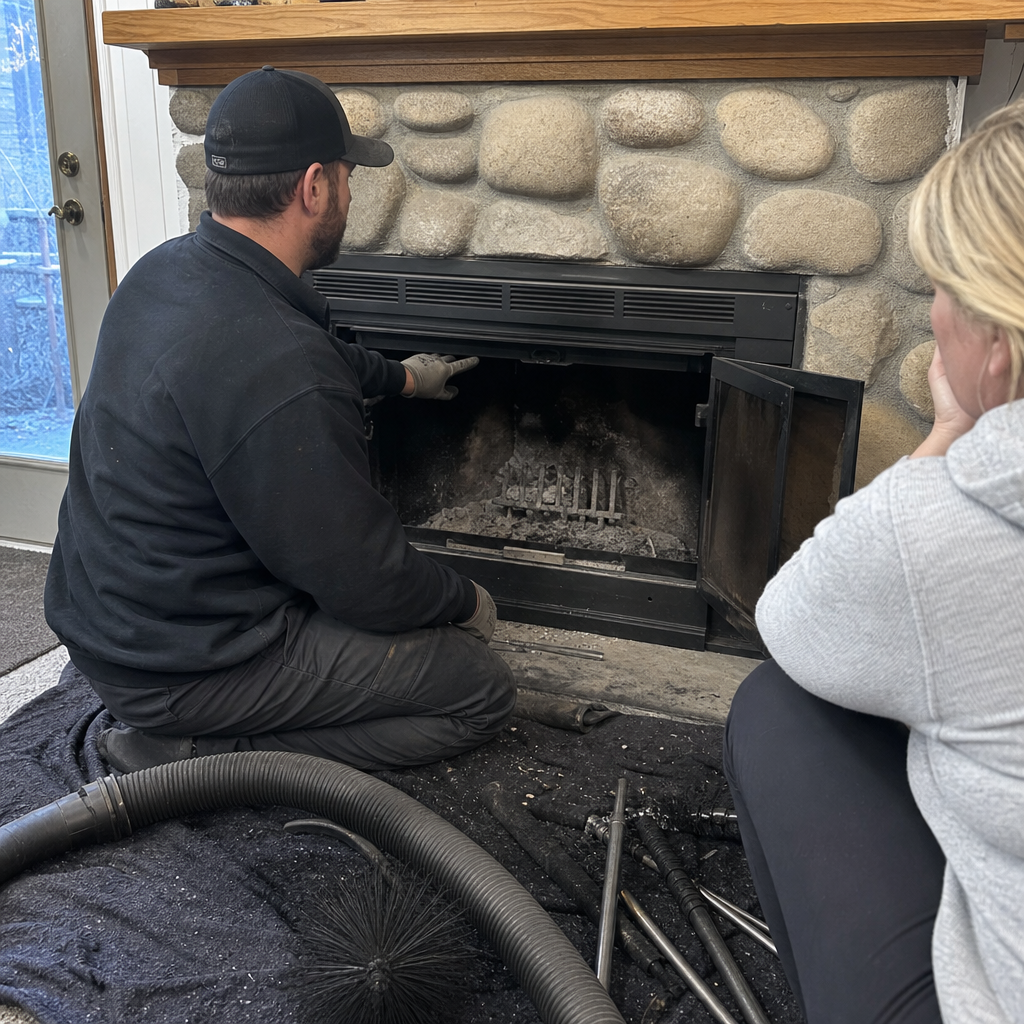
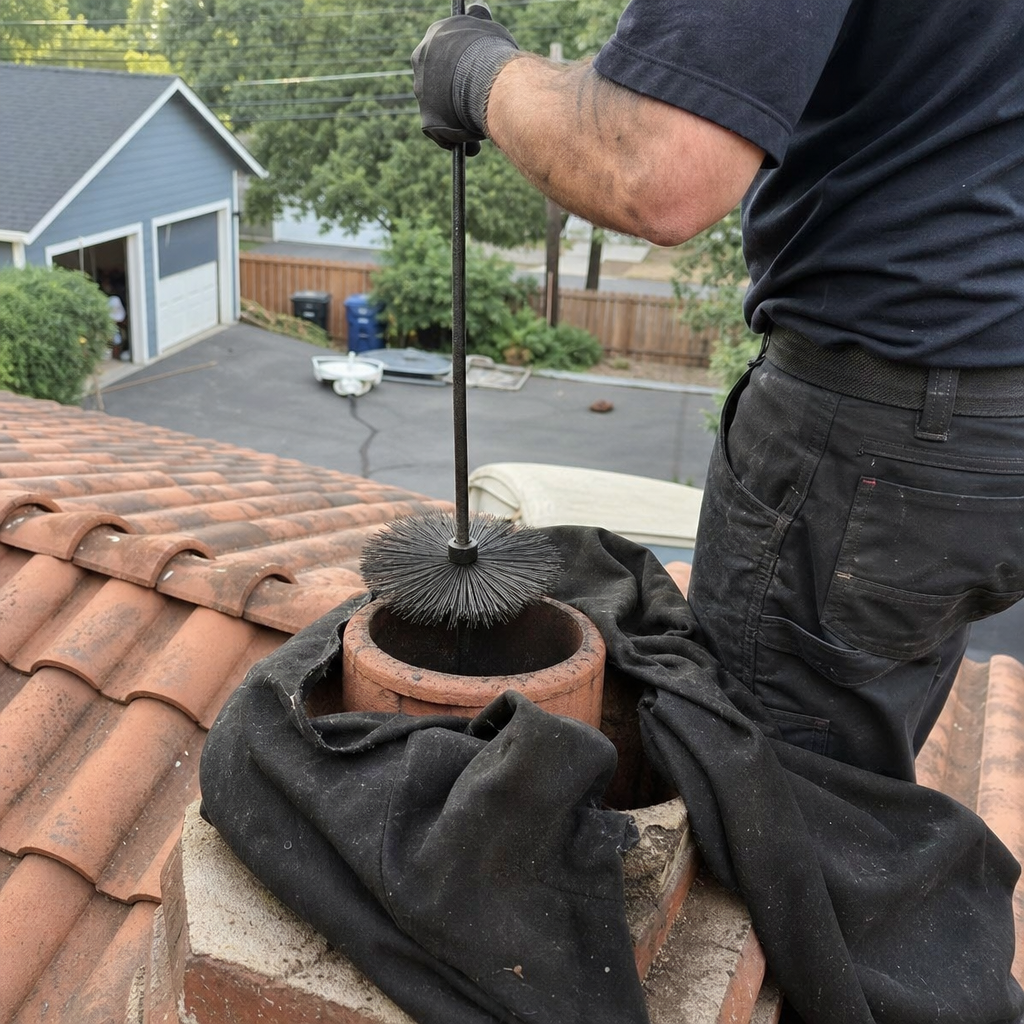
Understanding what you’re actually paying for helps clarify why frequency matters. Our Chimney Cleaning & Sweep isn’t a quick brush-and-vacuum operation. Here’s what Anthony does on every job he leads:
- Exterior inspection: Crown, cap, flashing, and visible masonry for spalling, cracking, or water intrusion — critical after Spokane’s freeze-thaw cycles.
- Interior flue evaluation: Visual and physical assessment of creosote stage (Stage 1 powdery soot, Stage 2 flaky glaze, or Stage 3 hard tar) and any obstructions from nests or debris.
- Firebox and damper check: Structural integrity, proper operation, and clearance to combustibles.
- Smoke chamber and shelf cleaning: The area above the damper where most chimney fires start — often skipped by sweep-only services.
- Debris removal and containment: HEPA-contained vacuum system; we leave the hearth cleaner than we found it.
- Written condition report: Photos, findings, and specific recommendations with no pressure to book additional work.
For households on the twice-annual plan, the October visit focuses on pre-season readiness: full sweep, cap and crown check, and confirmation that your system can handle the heating season. The January or February visit is lighter — inspection-heavy, sweep-as-needed — targeting the creosote that built up during your heaviest use months and any freeze-thaw damage that emerged.
When “Once a Year” Becomes “Right Now”
Even if you’re theoretically on an annual schedule, certain conditions should trigger an immediate call regardless of when you were last swept. These are non-negotiables we’ve learned from 11 years of post-incident calls:
| Symptom | What It Likely Means | Recommended Action |
|---|---|---|
| Strong, smoky odor when fireplace is not in use | Significant creosote buildup absorbing humidity; often precedes visible problems | Schedule inspection within 1–2 weeks |
| Visible black flakes or “soot snow” in firebox | Flue liner deterioration or damper seal failure | Stop using; call for inspection before next fire |
| Smoke backing up into room | Blockage, negative pressure issue, or flue sizing problem | Extinguish fire immediately; do not use until inspected |
| White staining (efflorescence) on exterior brick | Moisture intrusion through compromised masonry | Schedule within 2–3 weeks; likely needs masonry repair |
| Cracked or missing chimney cap | Water and animal entry point; accelerates all other damage | Schedule cap replacement; inspect for interior damage |
That smoky odor is the one homeowners dismiss too long. In Spokane’s dry winter air, creosote becomes hygroscopic — it pulls moisture from the air and off-gasses, producing that distinctive “fireplace smell” even when you’re not burning. By the time you notice it, you’ve typically got measurable buildup that a standard sweep won’t fully address.
Materials and Methods: Why the Details Matter
Not all chimney work is equal, and the materials used separate a lasting repair from a temporary fix. We specify DuraFlex and Olympia Chimney liners for relining jobs because their stainless alloys hold up to Spokane’s temperature swings and corrosive flue gases. For crown repair and resurfacing, HeatShield and Gelco products give us application-specific options — HeatShield for structural resurfacing, Gelco for cap and shroud fabrication that actually sheds water instead of pooling it.
We don’t stock every brand under the sun. We’ve narrowed to a curated set — DuraFlex, HeatShield, Gelco, Olympia Chimney, Famco, and Copperfield — because after 11 years, we know what survives a Spokane winter and what doesn’t. When we recommend a liner or cap, it’s because we’ve installed it, watched it age, and know how it performs in our specific climate.
This matters for frequency discussions because inferior materials fail faster. A cheap cap that rusts through in two years lets water into your flue year-round, accelerating creosote hardening and masonry damage. You’re not just cleaning more often — you’re cleaning a deteriorating system that gets more dangerous with each cycle.
FAQs
A routine chimney sweep and inspection in Spokane typically costs between $150 and $250 for a standard fireplace or wood stove flue in accessible condition. Insert configurations, third-floor access, or glazed creosote removal requiring rotary tools run higher — usually $300–$500. We provide upfront pricing before any work begins, and estimates are always free. Call (833) 749-2788 for an exact quote based on your specific setup.
For most Spokane homes with intact surrounding masonry, relining with a stainless steel product like DuraFlex or Olympia Chimney is significantly less expensive than full chimney rebuild — typically $1,200–$2,500 versus $4,000–$8,000+ for teardown and reconstruction. The key is catching liner deterioration early, before escaping gases have damaged the surrounding brick. Our inspection identifies which path makes sense; we don’t default to the more expensive option. If you’re unsure about your liner’s condition, call us at (833) 749-2788 for a no-pressure assessment.
During peak season (September through November), we’re typically booking 5–10 days out as Spokane homeowners rush to beat the first SRCAA curtailment forecast. Mid-winter and early spring often have more flexibility, with next-day or same-week availability. We maintain an emergency slot for smoke-backup or suspected blockage situations — if your chimney is actively unsafe, we’ll prioritize you. For fall scheduling, we recommend calling (833) 749-2788 by Labor Day to secure your preferred date.
If you’ve been burning regularly and it’s been more than 12 months since your last professional service, you need both — the inspection happens during the cleaning process, not instead of it. A visual-only inspection without sweeping can miss creosote buildup hidden behind bends or above the smoke shelf. The only households that might get by with inspection-only are those with gas fireplaces that see minimal use and have no odor or performance issues. When in doubt, we’ll tell you honestly whether you need the full service or just a look — call (833) 749-2788 and we’ll sort it out.
Key Takeaways for Spokane Homeowners
- The NFPA’s “once a year” is a minimum floor — not optimal for Spokane’s six-month heating season and heavy-use households.
- Burn 5+ days per week? Schedule twice a year: pre-season (September/early October) and mid-winter (January/February).
- 1970s insert-over-fireplace configurations in older Spokane neighborhoods accumulate creosote faster — default to twice-annual regardless of reported usage.
- Book before the first SRCAA curtailment forecast; appointment availability disappears fast once burn bans begin.
- Regular cleaning at $150–$250 prevents the $500–$1,500 repair bills we see from deferred maintenance.
If you’d rather have someone look at it than guess, Premier Chimney Cleaning Greater Spokane offers a no-pressure assessment — Anthony Perez leads every job himself, and we’ll give you a straight answer about what your chimney actually needs. Call (833) 749-2788 for a free estimate.
Written by Anthony Perez, Owner & Lead Technician at Premier Chimney Cleaning Greater Spokane, serving Spokane, WA.