
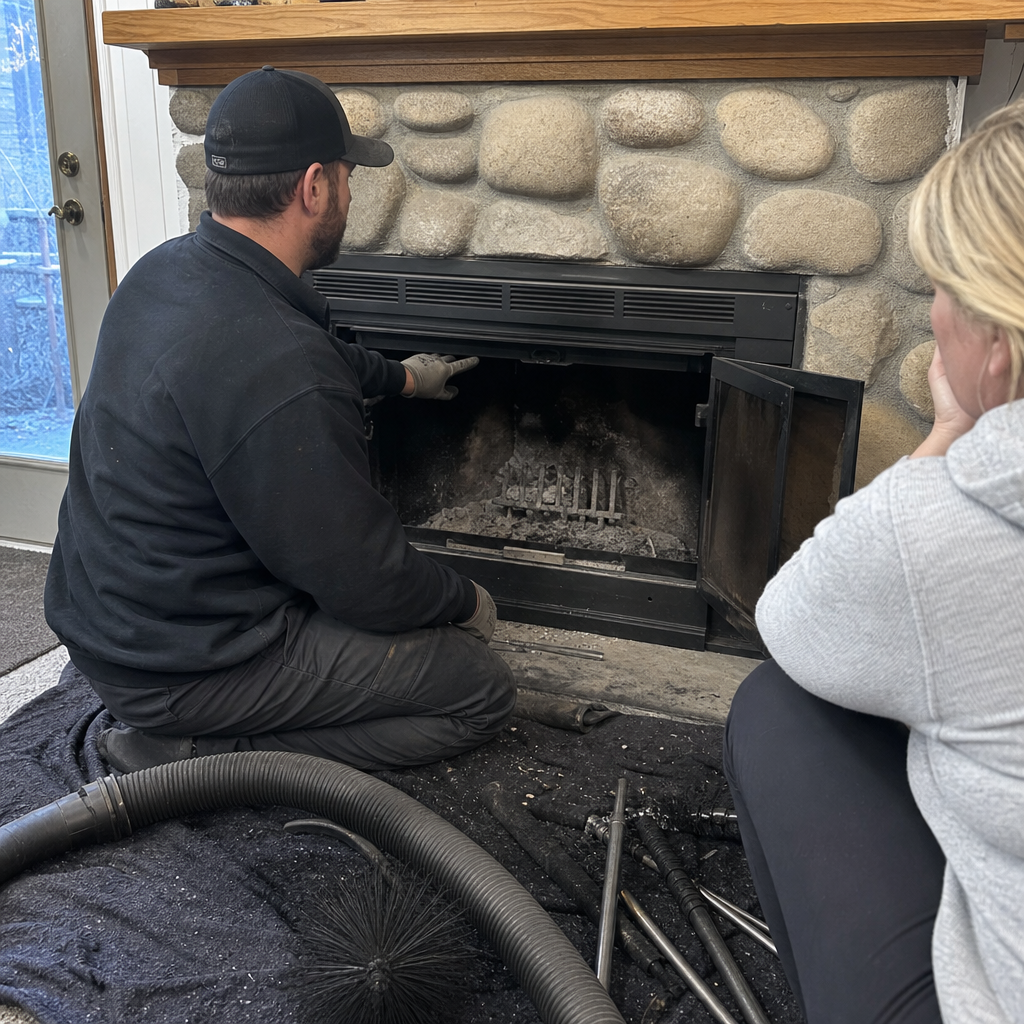
Signs Your Chimney Needs Cleaning in Spokane — Before the Smoke Tells You
The clearest signs your chimney needs cleaning are a fire that’s harder to start than last season, a draft that feels weaker or more variable, and a faint sharp or tarry smell even when the fireplace isn’t running. In Spokane, where our continental cold winters drive months of heavy wood-burning use, these subtle signals typically appear 6–10 weeks before obvious symptoms like smoke backdrafting or visible soot — and catching them early keeps your sweep in the $175–$275 range instead of escalating to a $600–$900 chemical treatment for Stage 3 creosote. If you’re noticing any of these changes, call Premier Chimney Cleaning Greater Spokane at (833) 749-2788 for a free estimate — we’ll tell you exactly what stage you’re in before any work starts.
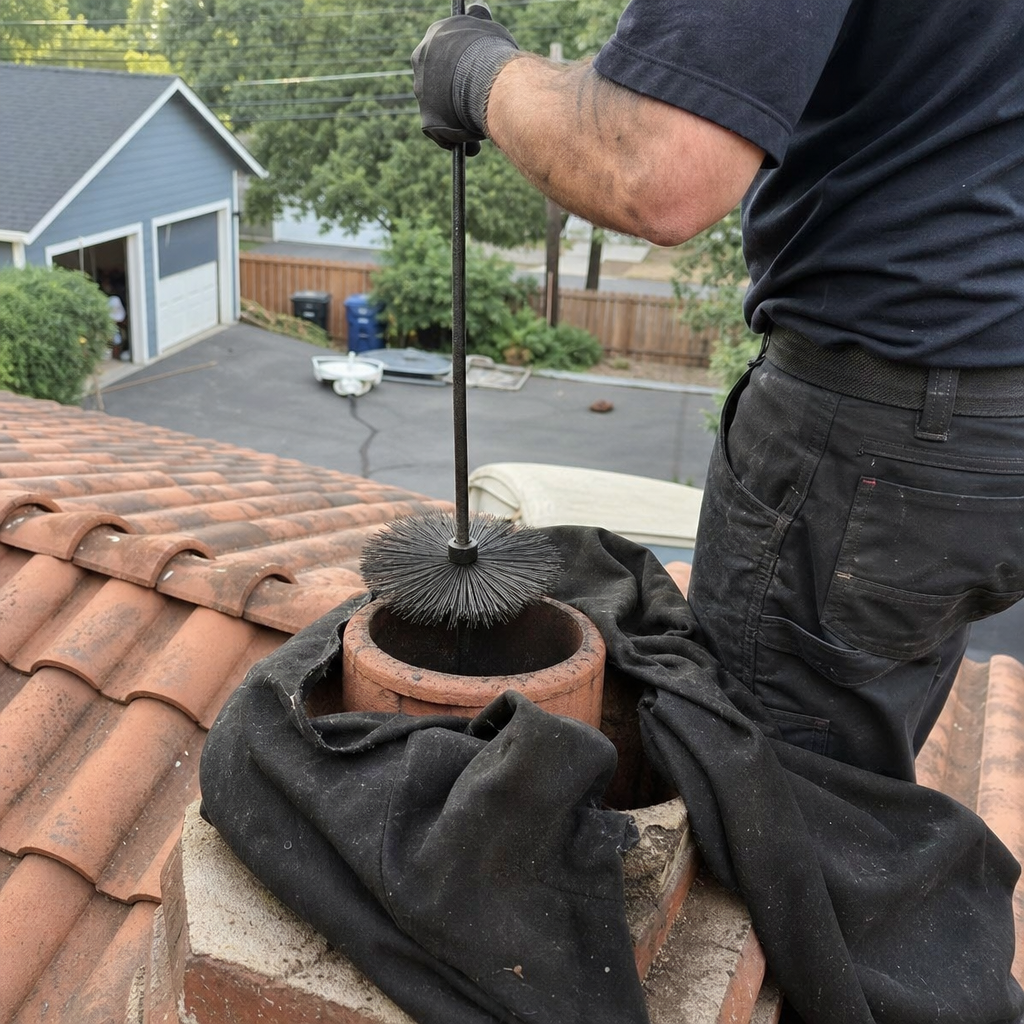
Why the Early Signs Matter More Than the Obvious Ones
Most “signs your chimney needs cleaning” articles list the dramatic warnings: smoke pouring into your living room, a strong campfire odor, visible black buildup around the firebox. By the time those show up, you’re not scheduling routine maintenance — you’re dealing with a restriction that’s already hazardous.
We’ve spent eleven years on Spokane rooftops, and the pattern repeats every fall. Homeowners in Browne’s Addition and South Hill call us in October saying their fireplace “still works fine, but something’s different.” That difference is the critical window. Here’s what we listen for when we’re called in before the obvious symptoms:
- Harder starts: Last season, dry kindling caught in under two minutes. Now you’re re-lighting, adjusting the damper, or using more paper. Partial flue restriction from light creosote buildup reduces oxygen flow just enough to matter.
- Inconsistent draft: The pull feels strong one day, weak the next, especially on milder Spokane afternoons when the stack effect is reduced. This variability often signals uneven creosote deposits narrowing the flue in sections.
- Faint tarry smell: Not the overwhelming odor of a dirty fireplace, but a sharp, almost chemical note you catch near the hearth or when the furnace kicks on and pressurizes the house. This is volatile creosote off-gassing — Stage 2 buildup beginning to activate.
- More ash residue on glass doors: If your wood stove or insert glass stayed clearer last season with the same wood and technique, poorer combustion from restricted airflow is the likely cause.
- Longer cool-down smell: After the fire’s out, the chimney used to go neutral in an hour. Now you notice a lingering scent into the next morning.
Anthony Perez, our owner and lead technician, pulled a flue apart last Tuesday in the Perry District where the homeowner had noticed harder starts since February but figured “it was just damp wood.” The flue was coated with puffy, tar-like third-degree creosote from throat to cap — a stop-burning situation that required chemical treatment before any safe use could resume. If it’s not safe to light, we’ll tell you before we pack up — not after.
The Spokane Seasonal Trigger: Last Winter’s Use Is Your Factual Sign
Here’s a sign competitors rarely mention: if you burned regularly through the previous Spokane winter and haven’t swept heading into fall, your chimney needs cleaning regardless of whether you’ve noticed symptoms. Creosote accumulation is structural, not always sensory. A single season of regular use in our climate — with prolonged hard freezes from October through March and roughly 49 inches of annual snow — can produce dangerous buildup even in chimneys that draft perfectly.
The Spokane Regional Clean Air Agency’s burn-curtailment system adds urgency to this reality. SRCAA issues Stage 1 and Stage 2 burn bans when winter temperature inversions trap smoke in the river basin. On green burn days, you can legally use your appliance — but only if it’s clean and certified. A dirty chimney on a green day is still a fire hazard, and in our eleven years of Spokane jobs, we’ve found Stage 3 buildups in chimneys whose owners had no idea anything was wrong because the fire still lit fine. The catch? When that cold snap hits and SRCAA calls a green day, you want to burn. If you haven’t swept and the appointment calendar’s full, you may sit through the one week of clear cold you could have legally used, waiting for a technician slot.
Savvy homeowners book chimney cleaning before the first curtailment-season forecast. If you’re reading this in late summer or early fall, last winter’s use is your sign — don’t wait for a symptom.
What Third-Degree Creosote Actually Looks Like (And Why It Changes Everything)
If you shine a flashlight up your flue and see dry, powdery gray or black soot, you’re looking at first-degree creosote — routine sweep territory. But if you see a tar-like, puffed, or dripping black glaze that looks almost like melted tire rubber, you’ve found third-degree creosote. This is not a “schedule when convenient” situation. This is a stop-burning signal.
Third-degree creosote forms when wood burns at lower temperatures — common with restricted airflow, damp fuel, or the smoldering loads some homeowners use overnight. In Spokane’s older housing stock, particularly the 1900s–1940s craftsman bungalows and late-Victorian homes in neighborhoods like Browne’s Addition and South Hill, many fireplaces received metal wood-stove inserts during the 1970s energy crisis. These inserts create high-heat, restricted-airflow configurations that produce condensate-stage creosote faster than open fireplaces. If your insert door or firebox throat shows heavy oily residue, the flue has likely accumulated the same glaze.
Third-degree creosote removal requires mechanical scraping, chemical treatment, or in severe cases, a liner replacement — not a standard sweep. We use HeatShield and Olympia Chimney materials when liner work is needed, matching the right product to the flue configuration. The cost gap is significant:
| Condition | Typical Approach | Price Range |
|---|---|---|
| First-degree (powdery soot) | Standard rotary sweep | $175–$275 |
| Second-degree (flakey, tarry layers) | Enhanced sweep with power brushing | $275–$450 |
| Third-degree (glazed, puffy, dripping) | Chemical treatment + mechanical removal | $600–$900 |
| Severe damage / failed liner | Liner replacement with certified materials | $2,500–$4,500 |
These ranges reflect what we see in the Spokane market, where our 892 verified reviews at a 4.7-star rating come from jobs across every stage of buildup. Nearly 900 homeowners have reviewed us because we’ve handled the full spectrum — from routine annual sweeps to complete liner rebuilds using DuraFlex, Gelco, and Famco components.
Common Local Scenarios We See Every Fall
Every chimney tells a story, and in Spokane, we see distinct patterns tied to our housing stock and climate. Here are the situations that cross our schedule repeatedly:
The “It Worked Fine Last Year” Call
Usually from South Hill or the Perry District, often a 1920s bungalow with original brickwork. The homeowner burned two to three cords last winter, maybe four, and never thought to sweep because “it always drafted great.” Now it’s October, the first cold night hits, and the fire won’t stay lit. We find the flue narrowed by 30–40% with second-degree buildup. A standard sweep restores function, but the homeowner’s already lost that first cold evening waiting for the appointment.
The Insert Surprise
1970s-era wood stove insert in a craftsman fireplace, common in Browne’s Addition. The insert itself works fine, but the homeowner hasn’t had the connecting flue inspected in years. The restricted airflow that makes inserts efficient also concentrates creosote. We open the system and find glazed buildup behind the insert collar where no homeowner can see. This requires partial disassembly and specialized cleaning — not a sweep-only contractor’s scope. We handle it start to finish because Anthony leads every job himself, not a subcontractor who might miss the connection point.
The Green-Day Panic
SRCAA announces a green burn day during a cold snap. The homeowner hasn’t swept, calls hoping for same-day service. In peak season, our calendar runs 5–7 days out. The green day passes. This is preventable — last winter’s use was the sign, not the forecast.
The Inspection Discovery
Home sale or purchase in progress, inspector flags the chimney. Often in older neighborhoods where the chimney hasn’t been actively used but was never properly closed off. We find bird nests, deteriorated mortar from freeze-thaw cycles, or abandoned liner sections. Our Level 2 inspection documents condition for the transaction, and we can quote any needed repair using the right material for your chimney — whether that’s a Gelco cap, HeatShield resurfacing, or Olympia Chimney liner components.
What to Check Yourself — And What to Leave Alone
We’re not going to tell you to climb your roof. Spokane’s roughly 49 inches of annual snow and prolonged freeze-thaw cycles leave surfaces slick and mortar joints brittle. But from the ground and hearth, you can gather useful information:
- Flashlight up the flue: From the firebox, look for the glaze versus powder distinction we described above. Document what you see with your phone — it helps us prepare.
- Damper operation: Does it open fully and seat cleanly? Sticky or incomplete damper movement often correlates with creosote accumulation at the throat.
- Smoke chamber visibility: Shine your light above the damper. Heavy soot staining on the chamber walls indicates incomplete combustion — a precursor to flue buildup.
- Cap and crown from the ground: Binoculars work. Missing caps, visible cracks, or vegetation signal water intrusion that accelerates creosote formation and masonry damage.
Do not attempt to scrape or clean the flue yourself. The risk of dislodging a blockage into a hidden elbow, damaging a liner, or creating a fire hazard exceeds any savings. Our Chimney Cleaning & Sweep service includes full inspection, and Anthony’s eleven years of chimney-only work means he recognizes configurations — like those 1970s insert retrofits — that generalists miss.
How Often Should Spokane Homeowners Actually Sweep?
The NFPA 211 standard calls for annual inspection and cleaning as needed. In practice, for Spokane’s climate and burn patterns:
- Primary heat source (3+ cords/year): Mid-season inspection and annual sweep minimum
- Supplemental use (1–2 cords/year): Annual sweep before heating season
- Occasional ambiance fires: Inspection every 1–2 years, sweep when buildup warrants
- Gas fireplace: Annual inspection for venting integrity; less frequent cleaning but not “never”
The key variable is wood quality and burning practice. Green or unseasoned wood, smoldering overnight loads, and restricted airflow all accelerate buildup. If you’re unsure where you fall, we’ll assess without pressure — our estimate visits carry no obligation.
FAQs
A standard chimney sweep in Spokane typically runs $175–$275 for a routine cleaning with inspection. If we find second-degree or third-degree creosote, the approach and price adjust accordingly — enhanced power brushing runs $275–$450, and chemical treatment for glazed buildup ranges $600–$900. We provide upfront pricing before starting any work, and estimates are free. Call (833) 749-2788 to schedule.
You can, but you shouldn’t assume it’s safe. In Spokane’s extended heating season, a single winter of regular use can produce dangerous buildup that’s not yet obvious. The structural accumulation happens regardless of whether you’ve noticed symptoms. We recommend scheduling a sweep before first use each fall — it’s the only way to know your flue condition for certain. If you’re unsure, call us for a quick assessment.
Repair is often viable for localized damage — HeatShield cerfractory resurfacing can restore a sound clay flue with minor gaps or spalling at a fraction of replacement cost. Full liner replacement with stainless steel becomes necessary when the clay is extensively cracked, the flue is unlined, or the sizing is wrong for the appliance. We evaluate both paths and quote honestly; there’s no benefit to us in overselling replacement when repair suffices. Nearly 900 homeowners have reviewed us because we recommend what’s actually needed.
For suspected unsafe conditions — visible third-degree creosote, smoke backdrafting, or a chimney fire event — we prioritize same-day or next-day response when possible. During peak fall season (September through November), standard appointments typically run 3–7 days out. If SRCAA calls a green burn day and you haven’t pre-booked, you may face the calendar gap we described. The best move is scheduling before you need emergency service — last winter’s use was your sign.
When to Call Premier Chimney Cleaning Greater Spokane
If your fire’s harder to start, your draft’s inconsistent, or you catch that faint tarry note near the hearth — or if you simply burned through last winter without a sweep — you’re seeing the signs your chimney needs cleaning. In Spokane’s cold-climate, burn-curtailment environment, waiting for obvious symptoms means waiting too long. Anthony Perez leads every job himself, bringing eleven years of chimney-only specialization and the accountability of an owner who’ll tell you straight whether your system is safe to use. We handle everything from routine sweeps to full liner rebuilds with DuraFlex, HeatShield, Gelco, Olympia Chimney, Famco, and Copperfield materials — no subcontracting, no coordinating multiple vendors.
If you’d rather have it looked at, Premier Chimney Cleaning Greater Spokane offers a no-pressure assessment in Spokane — call (833) 749-2788 for a free estimate.
Written by Anthony Perez, Owner & Lead Technician at Premier Chimney Cleaning Greater Spokane, serving Spokane, WA.