
What Is Creosote Buildup? A Spokane Homeowner’s Guide to the Three Stages Hiding in Your Chimney
Creosote buildup is the accumulation of condensed combustion byproducts inside your chimney flue — a tar-like substance that forms in three progressively dangerous stages, from brushable soot to hardened glaze that can ignite at temperatures exceeding 2,000°F. In Spokane’s extended heating season, a household burning wood regularly from October through March can advance from Stage 1 to Stage 2 creosote within a single winter without a mid-season inspection. If you’re unsure what stage is currently in your flue, call Premier Chimney Cleaning Greater Spokane at (833) 749-2788 for a no-pressure inspection — we’ll show you exactly what we’re looking at before we quote any work.
Why Spokane’s Heating Season Accelerates Creosote Formation
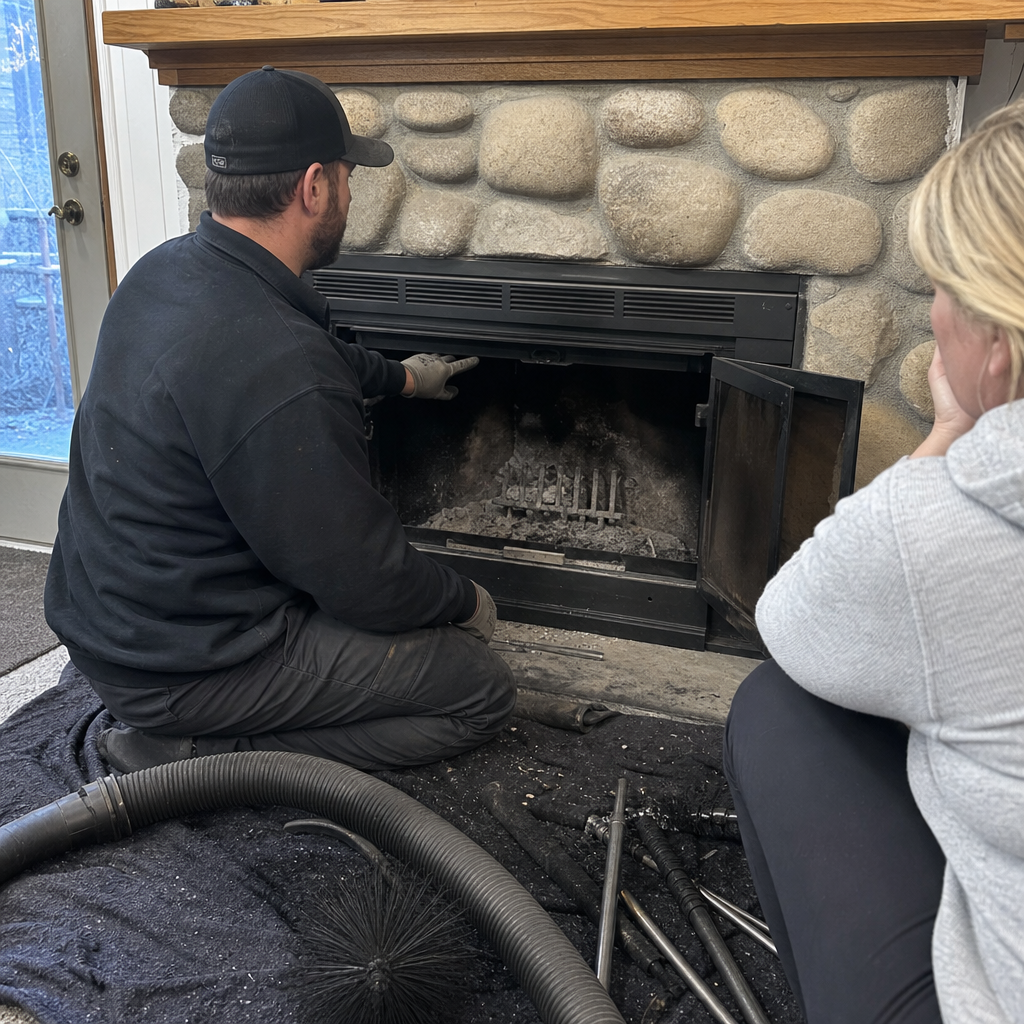
Last February, Anthony pulled apart a flue in the South Hill neighborhood that looked like someone had poured black syrup down the liner and let it cure. The homeowner had been burning applewood slowly all winter — “to make it last,” he said — and didn’t understand why a standard sweep quote had jumped to something involving rotary chains and chemical treatment. That flue had gone from Stage 1 to Stage 2 in about fourteen weeks of Spokane’s coldest months.
Here’s what most homeowners miss: creosote isn’t the black stuff in your chimney. It’s what that black stuff turns into after heat and time get to it — and by Stage 3, it’s closer to hardened tar than soot, and a wire brush won’t touch it. I’ve pulled apart enough Spokane flues in February to know that most homeowners have no idea which stage they’re looking at.
The chemistry is straightforward enough. When wood burns incompletely — which happens with slow, smoldering fires, damp fuel, or restricted airflow — the unburned hydrocarbons rise as combustion gases. These gases condense on the cooler interior surfaces of your flue liner, especially near the top where exterior temperatures drop fastest. Each layer traps more residue, and the composition changes with heat exposure. Spokane’s continental cold winters create ideal condensation conditions: the temperature differential between your flue gases and the outside air is extreme, particularly during those January nights when the mercury drops below 15°F.
The Spokane Regional Clean Air Agency adds another wrinkle. Their seasonal wood-burning curtailment days — Stage 1 and Stage 2 burn bans during winter temperature inversions — mean homeowners who rely on fireplaces for supplemental heat can only legally burn on “green” days. This pushes some households to burn longer and hotter when they do have the chance, or to smolder fires overnight to avoid relighting during restricted periods. Both patterns accelerate creosote progression. A clean, certified chimney isn’t just safer — it’s the difference between using your appliance all winter or losing access to it on the coldest nights, a stakes-raising dynamic that doesn’t exist in milder, marine-climate cities like Seattle or Portland.
The Three Stages of Creosote: What Each Looks Like and What It Means
Understanding these stages matters because the treatment — and the cost — changes dramatically at each level. Here’s what we find when we shine a flashlight up Spokane flues:
- Stage 1 (First-Degree): Dry, flaky, and black — think of fireplace soot that brushes off easily. This is normal residue from any wood-burning appliance and removes cleanly with standard sweeping tools. If you’re doing the flashlight test yourself, it looks like loose charcoal dust clinging to the liner walls.
- Stage 2 (Second-Degree): Harder, shinier, and tar-like — often appearing as crunchy black flakes or ribbons that resist brushing. This requires rotary cleaning equipment: spinning chains or whips that mechanically break the bond. The texture is somewhere between hardened syrup and brittle plastic. In Spokane, we see this most often in flues serving wood-stove inserts, especially those 1970s-era metal units retrofitted into original fireplaces in Browne’s Addition and Perry District craftsmans.
- Stage 3 (Third-Degree): Glazed, hardened, and glossy — a thick, enamel-like coating that can be brown or black, sometimes with rainbow iridescence from repeated heating. A wire brush won’t scratch it. Chemical treatments or physical removal with specialized equipment are required, and the underlying liner often shows heat damage. This is chimney fire fuel: it ignites at lower temperatures than raw wood and burns hot enough to crack clay tile liners or warp stainless steel.
The progression isn’t linear in real-world conditions. A single winter of nightly burning in Spokane — roughly 180 evenings from October through March — can push a flue from Stage 1 to Stage 2 if the homeowner favors slow, overnight burns. Stage 3 typically requires multiple seasons of neglect or specific fuel problems (unseasoned wood, consistently damp fuel, or appliance misfiring), but we’ve found it in homes where the previous owner “never had a problem” for fifteen years.
Why Stage 3 Creosote Changes Everything — Including Your Repair Options
Here’s the detail that separates an informed homeowner from someone getting sticker shock: Stage 3 creosote cannot be brushed out. Period. Anyone quoting you a standard sweep price without looking inside your flue first is either guessing or planning to upsell you on the day of service.
When Anthony arrives at a Spokane home and finds Stage 3 glaze, the conversation shifts from cleaning to remediation. The creosote itself must be treated with chemical agents that break down the glazed layer over days or weeks, followed by mechanical removal. But the more urgent question is what the creosote has already done to the liner beneath it.
Stage 3 creosote burns at temperatures exceeding 2,000°F — far hotter than the 1,200°F rating of standard clay tile liners. Even a small chimney fire, the kind that might go unnoticed as a “whooshing” sound or unusual draft, can crack tiles, compromise mortar joints, or create gaps that allow combustion gases to reach surrounding framing. Spokane’s older housing stock amplifies this risk: those 1900s–1940s brick chimneys in neighborhoods like Browne’s Addition were built before modern liner standards, and many have survived decades of thermal cycling that modern masonry wouldn’t tolerate.
This is where our material expertise becomes relevant to your actual repair path. After Stage 2 or Stage 3 damage, we evaluate whether the existing liner can be resurfaced or must be replaced entirely:
| Condition Found | Typical Treatment | Material Used |
|---|---|---|
| Stage 2 creosote, intact clay tiles | Rotary mechanical cleaning + inspection | Standard sweep tools, video inspection |
| Stage 3 creosote, minor tile damage | Chemical treatment + resurfacing | HeatShield cerfractory resurfacing compound |
| Stage 3 creosote, cracked or missing tiles | Full liner replacement | DuraFlex stainless steel relining system |
| Structural chimney damage from fire | Rebuild or partial reconstruction | Olympia Chimney components, custom masonry |
We don’t guess at this. Anthony runs a camera up every flue before quoting liner work — if the tile is compromised below what HeatShield can seal, we’ll show you the footage and explain why DuraFlex replacement is the only sound option. If it’s not safe to light, I’ll tell you before I pack up — not after.
Spokane’s Housing Stock: Why Creosote Hides Differently Here
The flue configurations we encounter in Spokane create creosote problems that newer Sun Belt suburbs simply don’t have. During the 1970s energy crisis, thousands of homeowners in South Hill and Perry District bungalows added metal wood-stove inserts through existing fireplace openings. These inserts were vented through the original chimney flue, often without proper liner sizing or connection.
The result is a double-use flue that runs cooler than designed — the insert’s exhaust doesn’t maintain the temperatures needed to keep gases in vapor form all the way to the top. Cooler flue surfaces mean more condensation, more residue, and faster stage progression. We’ve pulled Stage 2 buildup from these configurations after a single season of weekend use.
Adding to this, Spokane receives roughly 49 inches of snow annually with prolonged hard freezes from October through March. Masonry chimneys endure hundreds of freeze-thaw cycles each winter that accelerate mortar joint cracking and spalling. A cracked crown or deteriorated mortar lets moisture into the flue system, which doesn’t just damage masonry — it cools flue gases further and changes how creosote deposits form. The combination of insert-cooled flues and moisture intrusion from aging masonry is a creosote accelerator we see repeatedly in pre-war Spokane homes.
Experienced Spokane sweeps know that fall appointments fill up fast because savvy homeowners book chimney cleaning before the first curtailment-season forecast — if the SRCAA issues a burn ban and your chimney hasn’t been swept, you may sit through the one week of clear cold you could have legally burned, waiting for a technician slot.
What You Can Check Yourself — and When to Stop
There’s a safe middle ground between ignoring your chimney and attempting dangerous DIY work. Here’s what we encourage Spokane homeowners to do:
- The flashlight test: Open your damper, wait for the flue to cool completely, and shine a bright flashlight up the liner. Stage 1 looks like loose black dust. Stage 2 shows shiny or ribbon-like formations. Stage 3 appears as glossy, hardened glaze — if you see rainbow colors or a thick enamel coating, stop and call a professional.
- Check your firebox and smoke chamber: Soot accumulation here often mirrors flue conditions. Heavy, shiny buildup in the firebox suggests Stage 2 or 3 conditions above.
- Listen to your fires: A properly drafting chimney shouldn’t smell strongly of smoke in the room. Persistent smoke odors, difficulty starting or maintaining draft, or visible smoke spillage when opening the loading door all suggest flue restriction — potentially from creosote buildup.
What we don’t recommend: attempting to clean Stage 2 or 3 creosote yourself. Rotary cleaning equipment requires training to use without damaging liner tiles. Chemical treatments for Stage 3 must be applied with knowledge of the specific product’s activation requirements and safety protocols. And any work involving ladder access to a snow- or ice-covered Spokane roof in winter carries genuine fall risk. Anthony leads every job personally because chimney work combines technical knowledge with physical conditions that reward experience — eleven years of reading flue conditions, knowing when a liner sounds wrong under inspection, and recognizing the specific challenges of our local housing stock.
How Premier Chimney Cleaning Handles Creosote Assessment
Our process reflects the reality that creosote stage determines everything about scope and cost. When you schedule with Premier Chimney Cleaning Greater Spokane, here’s what happens:
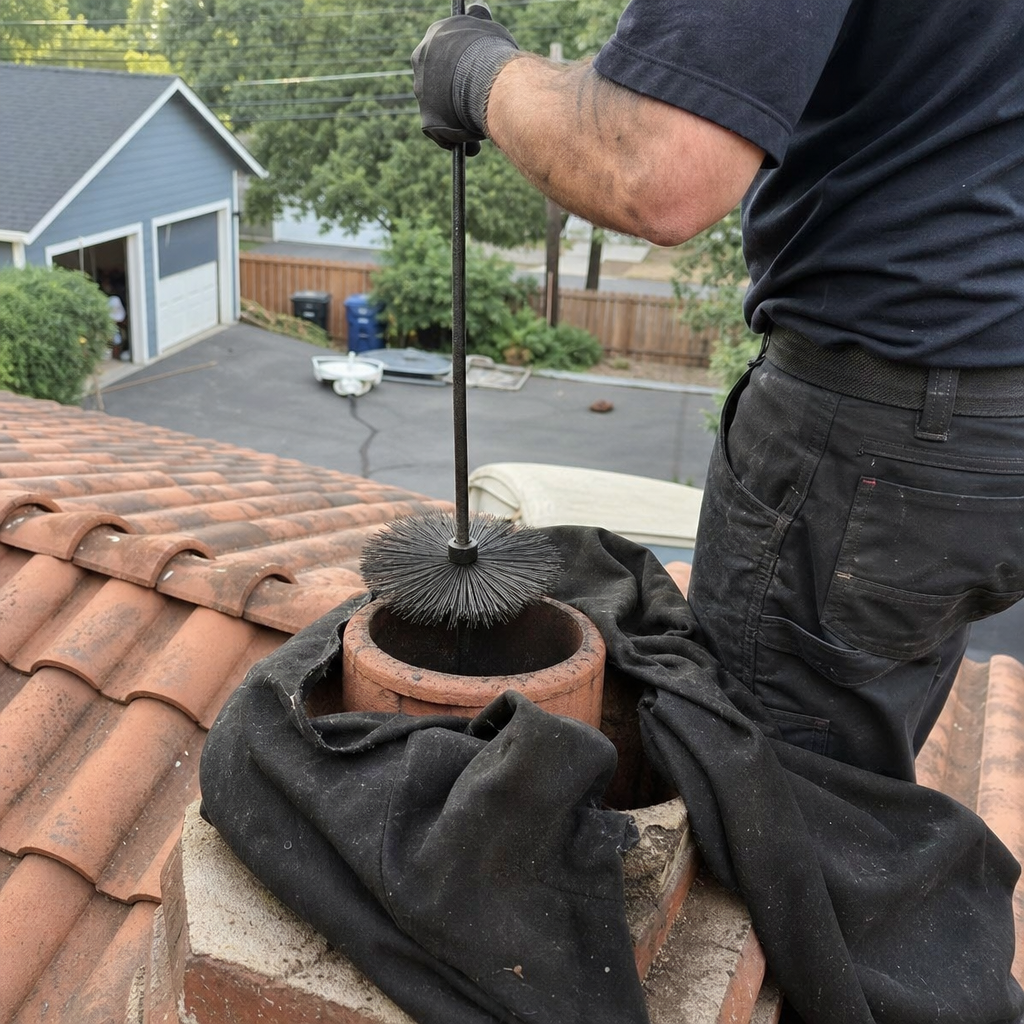
Anthony arrives with camera inspection equipment, rotary cleaning tools, and the specific chemical agents used for Stage 3 treatment. We don’t quote blind — the inspection comes first. If we find Stage 1 buildup, you’ll get a straightforward sweep and documentation for insurance or home sale purposes. Stage 2 triggers a conversation about rotary cleaning and whether liner damage has begun. Stage 3 means explaining the chemical treatment timeline, assessing liner condition, and presenting repair options if the underlying system has been compromised.
Nearly 900 homeowners have reviewed us across eleven years of chimney-only work, and the consistency of that feedback — 892 reviews at a 4.7 rating — reflects something specific: we handle it start to finish, with the same lead technician assessing, explaining, and executing the work. No subcontractor handoffs, no mystery about who’s on your roof.
We work with HeatShield for liner resurfacing, DuraFlex for full stainless relining, and Olympia Chimney and Famco for caps, dampers, and structural components when chimney repair follows creosote damage. The right material for your chimney depends on what we find — which is why the inspection precedes every quote.
FAQs
Shine a flashlight up your cooled flue: loose black dust indicates Stage 1, shiny or ribbon-like formations mean Stage 2, and glossy hardened glaze with possible rainbow discoloration signals Stage 3. If you suspect Stage 2 or 3, call Premier Chimney Cleaning Greater Spokane at (833) 749-2788 for a professional camera inspection — we’ll show you exactly what stage you’re dealing with before any work begins.
No — Stage 3 glazed creosote requires chemical treatment or specialized mechanical removal that standard brushing cannot achieve, and the underlying liner must be inspected for heat damage before the chimney is used again. The chemical treatment typically requires multiple days of application and reaction time before mechanical removal can proceed safely.
No — even properly seasoned hardwood produces some creosote; the goal is minimizing incomplete combustion that accelerates stage progression, not eliminating residue altogether. Slow-burning fires, restricted airflow, and cool flue temperatures — common when homeowners try to extend burn time on cold Spokane nights — increase creosote formation regardless of wood quality.
For wood-burning appliances used regularly through Spokane’s October-to-March heating season, we recommend annual inspection before the burning season begins, with consideration for mid-season assessment if you’re burning most nights — the duration of our heating season can advance creosote stages faster than annual-only monitoring catches. Call (833) 749-2788 to schedule before fall appointments fill and potential burn bans limit your usable heating window.
When Creosote Becomes a Safety Issue — Not Just Maintenance
The transition from maintenance concern to active hazard happens at Stage 3, but the warning signs often appear earlier. A chimney fire doesn’t require Stage 3 glaze — Stage 2 buildup can ignite under the right conditions, though it burns less intensely and may self-extinguish. Stage 3 is different: it’s essentially concentrated fuel coating your flue, with the ignition temperature of paper and the energy content of coal oil.
Spokane’s extended heating season means more cumulative burn hours than coastal Pacific Northwest cities, and our temperature inversions create pressure differentials that can affect draft performance. A flue that drafted adequately in November may struggle in January’s coldest snap — right when you’re most dependent on the heat source and least inclined to stop using it for maintenance.
This is why we emphasize timing. The homeowners who fare best are those who treat chimney inspection as part of their fall preparation, alongside weatherstripping and furnace filters. Waiting until you’re already burning nightly means playing catch-up with creosote that may already be advancing.
If you’d rather have it looked at, Premier Chimney Cleaning Greater Spokane offers a no-pressure assessment in Spokane — call (833) 749-2788 for a free estimate.
Written by Anthony Perez, Owner & Lead Technician at Premier Chimney Cleaning Greater Spokane, serving Spokane, WA.